Preserved in Colour: Staying at the Cheong Fatt Tze Mansion, George Town
Living — Cheong Fatt Tze Mansion, George Town
By James B. Stoney, Editor ·
A 19th-century mansion in George Town held intact through preservation rather than redevelopment — where staying inside the building means staying within its history.
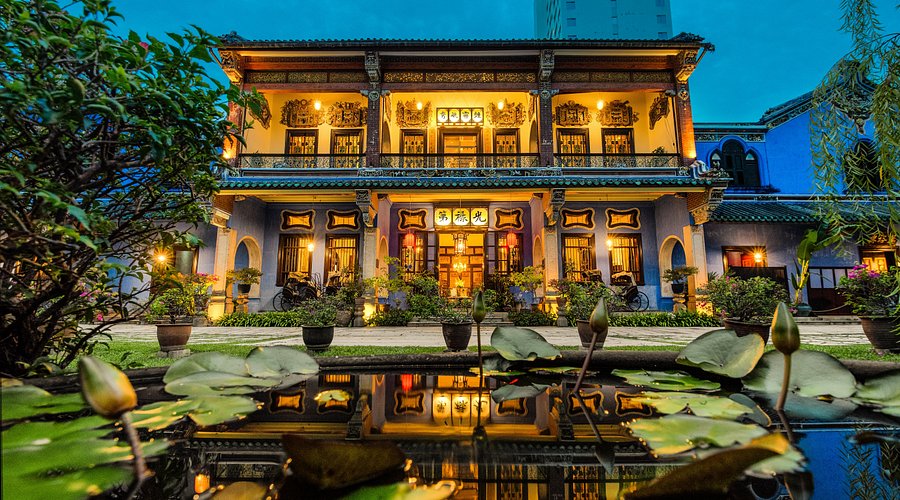
Some buildings are restored.
Others are preserved.
The Blue Mansion sits firmly in the latter.
A House With a Past
Built in the late 19th century by Cheong Fatt Tze, the mansion was designed as both residence and statement — a reflection of wealth, influence and position within the region.
Its architecture draws from multiple traditions.
Chinese courtyards, European influences and local materials sit alongside one another, forming a structure that feels layered rather than singular.
Restoration as Continuity
By the late 20th century, the building had fallen into decline.
What followed was not a redevelopment, but a careful restoration — one that aimed to retain the original character rather than reinterpret it. Materials were repaired where possible, replaced only when necessary.
The result is not polished.
It is intact.
Living Within It
Staying at the mansion changes the relationship to the space.
Rooms are not standardised. Layouts vary. Movement through the building follows its original design — around courtyards, along corridors, through spaces that were not built with modern hospitality in mind.
That is part of the experience.
You are not staying in a hotel that references history.
You are staying within it.
George Town Context
Located in George Town — a UNESCO World Heritage site — the mansion sits within a wider environment where preservation remains central.
Streets, shophouses and public buildings carry the same sense of continuity.
The Blue Mansion is one of the most visible examples of that.
Why It Earns Its Place
There are many heritage hotels.
Few feel this directly connected to their past.
The Blue Mansion does not simplify its history or adapt it too heavily for comfort. It allows the building to remain what it is — layered, imperfect and continuous.
It pairs naturally with the slower, more deliberate rhythm the Reset Companion is built around — a reminder that the most enduring environments are the ones that carry their past intact, rather than smoothing it away.
Vitae Lifestyle Scorecard
- Architecture9.6 / 10
- Preservation9.5 / 10
- Atmosphere9.3 / 10
- Overall experience9.4 / 10
Who it's for
- Those interested in architecture and cultural history.
- People looking for something beyond standardised hotel experiences.
- Anyone comfortable trading uniformity for character.
Questions
What is the Cheong Fatt Tze Mansion?
The Cheong Fatt Tze Mansion, known as the Blue Mansion, is a 19th-century heritage property in George Town, Penang. Built by the merchant Cheong Fatt Tze, it combines Chinese, European and local architectural influences and operates today as a boutique hotel and cultural landmark within a UNESCO World Heritage site.
Can you stay overnight at the Blue Mansion?
Yes — the mansion operates as a boutique hotel with rooms spread across the original building. Rooms vary in layout and size, following the mansion's original design rather than a standardised hospitality format. It is not a conventional hotel experience, which is precisely what makes it worth considering.
Is the Blue Mansion worth visiting in George Town?
For those interested in architecture, cultural history, or heritage travel, yes — it is one of the most directly connected heritage experiences in Penang. Guided tours of the building run daily for non-staying visitors. The surrounding streets of George Town carry the same sense of preserved continuity.
Where is the Blue Mansion located?
The Cheong Fatt Tze Mansion is located at 14 Leith Street, George Town, Penang, Malaysia — within the UNESCO World Heritage buffer zone and walking distance from the city's main heritage streets and shophouses.
This article appears in Edit No. 10 — On Information and Attention


